Planning for 2026: Building a Marketing Roadmap Across Print, Events & Company Stores
It’s the start of a new year, and marketing leaders are being asked to do more with less—Print is no longer just print, events are no longer one-off moments, and company stores are no longer “nice-to-haves”—they’re necessary and strategic brand and revenue tools. The brands that will win this year aren’t chasing tactics- they’re building a clear, connected roadmap that aligns print, events, and company stores with real business goals. Here’s how to create your brand’s 2026 marketing roadmap—one that’s intentional, scalable, and designed to deliver value all year long.
Start with Strategy: Defining Your 2026 Marketing Foundation
Building a strong 2026 Marketing Roadmap starts with alignment—connecting print, events, and company stores under a single strategy with a strong foundation; an approach that, according to HubSpot, reflects why integrated marketing works across channels.
Align Marketing Goals with Business Objectives
Start by asking the right questions:
- What are your top business priorities for the year—growth, retention, recruitment, brand awareness, or cost control?
- Which audiences matter most—customers, prospects, employees, channel partners, or all of the above?
- How will success be measured across channels?
When print, events, and company stores are planned in isolation, they often compete for budget and attention. However, when they’re aligned under shared goals, they reinforce one another. For example- an event strategy focused on lead generation should influence what print materials are produced and how branded merchandise is distributed before, during, and after the event.
Build a Unified Brand Experience
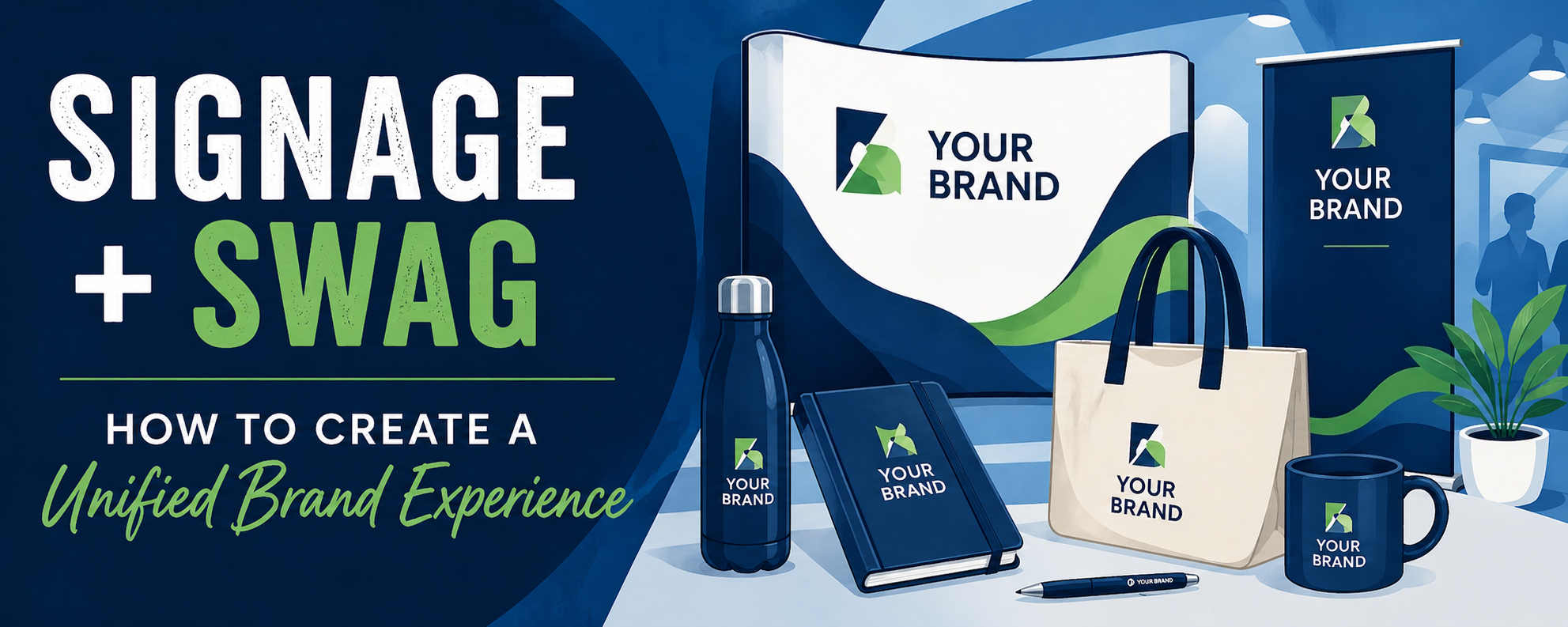
Consistency is no longer optional- your audience expects a seamless brand experience whether they’re opening a direct mail piece, walking a trade show floor, or ordering from your company store.
Your roadmap should clearly define:
- Core brand messaging for the year
- Visual standards across print, displays, and merchandise
- Tone and positioning for different audience segments
This foundation ensures every execution feels intentional, not fragmented.
Planning Print with Purpose in the Year Ahead
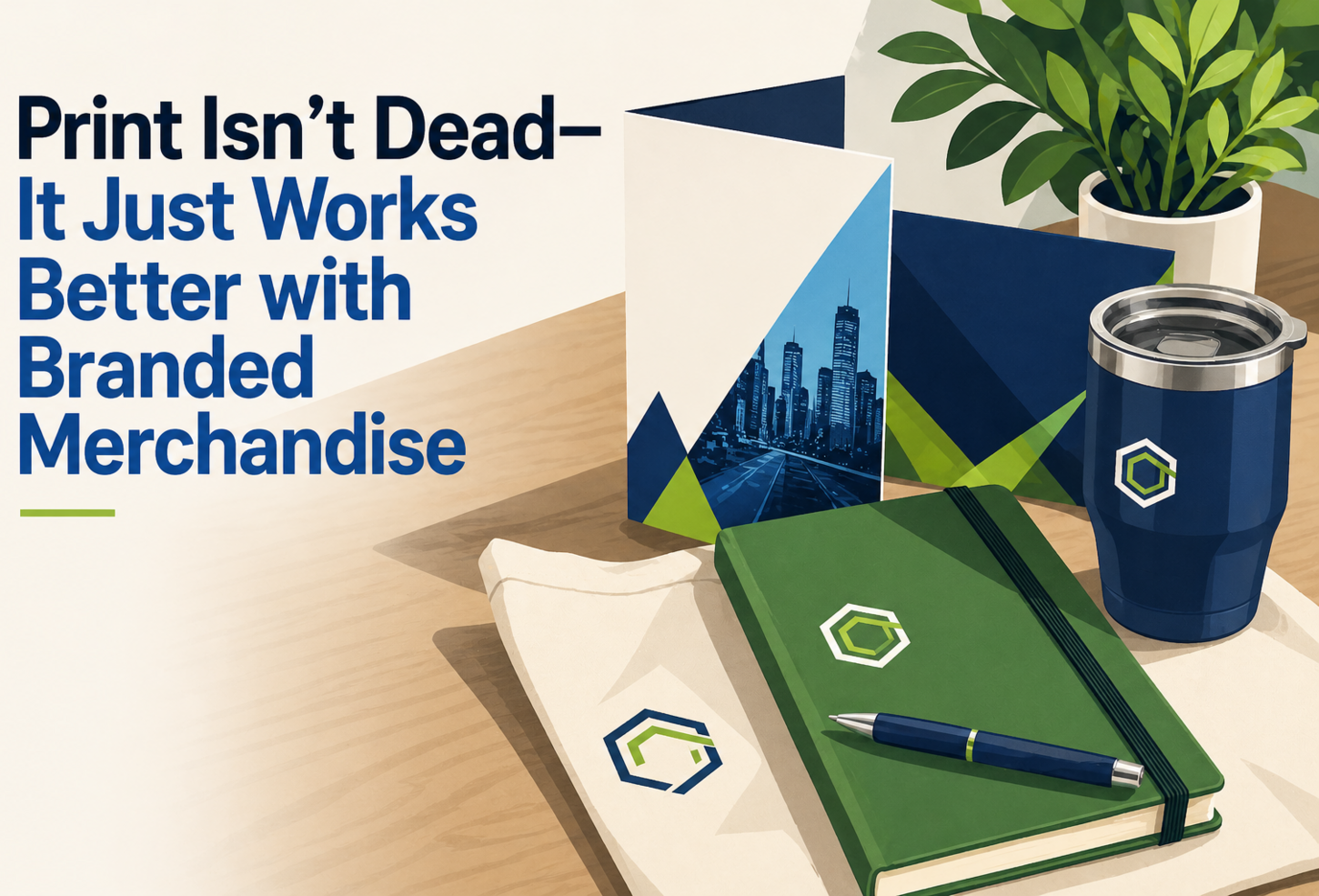
Print remains a powerful tool—but only when it’s planned strategically and integrated thoughtfully.
Shift from Volume to Value
In 2026, effective print marketing will be less about how much you produce, and more about why you produce it. Instead of defaulting on bulk orders, focus on targeted, high-impact pieces such as:
- Sales enablement materials aligned to specific stages of the buyer journey
- Personalized direct mail that complements digital campaigns
- Event-specific print assets designed to educate, not clutter
A smart print roadmap includes fewer pieces, better timing, and clearer intent.
Plan Print Around Campaigns and Moments
Rather than treating print as a standalone tactic, map it directly to key moments throughout the year:
- Product launches
- Seasonal promotions
- Industry events
- Internal initiatives like onboarding or recognition
This approach reduces waste, improves relevance, and makes print easier to justify from a budget perspective.
Designing Events as Year-Round Brand Experiences
This year, events are no longer isolated line items—they’re brand experiences with long tails.
Map Events into Your Annual Marketing Calendar
Whether you’re hosting, sponsoring, or exhibiting, events should be planned as part of a broader ecosystem. Your roadmap should account for:
- Pre-event promotion (print, digital, and merchandise)
- On-site engagement tools (displays, signage, giveaways)
- Post-event follow-up (direct mail, thank-you kits, company store offers)
By planning events holistically, you maximize ROI and extend their impact far beyond the show floor.
Use Merchandise Strategically at Events
Branded merchandise has evolved from freebies to brand builders. In 2026, the most effective event merchandise is:
- Useful and aligned with your audience
- On-brand and intentional
- Distributed strategically, not indiscriminately
Also, your roadmap should define how merchandise supports event goals- whether that’s driving booth traffic, reinforcing brand recall, or creating post-event touchpoints.
Company Stores: The Backbone of Brand Consistency
Company stores are one of the most underutilized tools in marketing planning—but one of the most powerful.
Centralize Control Without Sacrificing Flexibility
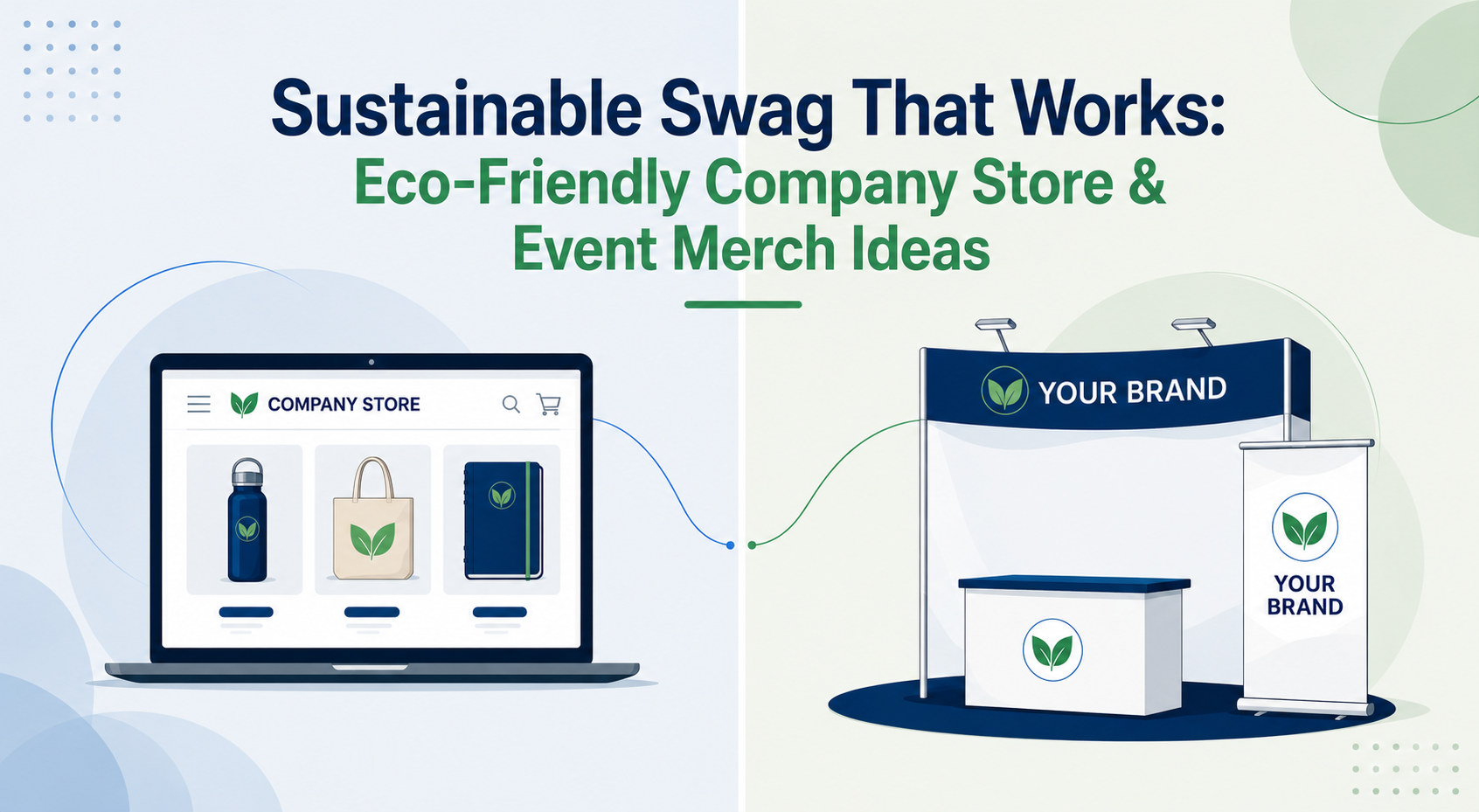
A well-built company store allows brands to:
- Maintain brand consistency across departments and locations
- Control budgets and approvals
- Simplify ordering for employees, partners, and franchisees
Your roadmap should position the company store as a central hub—not an afterthought.
Integrate Company Stores into Campaigns and Events
The most effective company stores support marketing initiatives in real time. Examples include:
- Event-specific collections for exhibitors or attendees
- New hire kits ordered directly through the store
- Seasonal campaigns with pre-approved branded items
By integrating company stores into your marketing roadmap, they become a scalable solution—not a reactive one.
Bringing It All Together: Your 2026 Marketing Roadmap
Ultimately, a successful marketing roadmap doesn’t just list tactics—it connects them. Print supports events. Events drive company store engagement. Company stores reinforce brand consistency across every touchpoint.
This is why it’s important to focus on:
- Intentional planning over reactive ordering
- Integration over silos
- Long-term brand value over short-term wins
This not only improves efficiency, but it also creates a stronger, more memorable brand experience.
Ready to Build Your Marketing Roadmap?
Whether you’re rethinking your print strategy, elevating your event presence, or building a fully optimized company store, the right approach makes all the difference.
At Brand Advantage LLC, we can help prepare you for the year ahead, creating a 2026 marketing roadmap that works for all of your print, event, and company store needs. Contact our team today!